
Defensible Space Hardscape for Colorado Springs Homes
Wildfire in Colorado Springs is not a foothills-only problem. Embers travel. Waldo Canyon in 2012 and Black Forest in 2013 changed how this region thinks about decks, siding, and yards, and the city’s Wildland-Urban Interface code now calls for ignition-resistant materials, safer roofing, and fire-resistant siding in mapped areas.
We have already written about Colorado Springs WUI regulations and fire-resistant decking materials. This post covers the part most homeowners leave for last: the first five feet of ground around the house, including whatever sits under the deck.
Fall is the practical time to deal with it. Beds are getting cleaned out, mulch is getting refreshed or removed, and needles are piling against foundations.
One note before we start. Whether any of this is required on your property depends on WUI mapping and the scope of your project. Confirm your parcel status and permit requirements with the Colorado Springs Fire Department and your local building department. This post is education, not a code determination for your address.
What the Immediate Zone Is
Defensible space is described as a series of rings moving outward from the house. The innermost ring, roughly the first 0 to 5 feet, is called the Immediate Zone. It is the highest-priority band because that is where embers and direct flame contact do the most damage.
The guidance comes down to one idea: give an ember nothing to land on. In practice that means noncombustible surfaces in that strip, such as rock, gravel, concrete, or stone and concrete pavers, and keeping wood mulch, shrubs, and woody debris out of it. The Colorado Springs Fire Department has been direct about this, asking residents to skip mulch in favor of stone and to choose less flammable plants.
Here is the test. If an ember lands next to your siding or under your deck tonight, what is there for it to catch?
Why Hardscape Belongs in a Wildfire Conversation
Most people picture fire mitigation as cutting trees. Tree work does matter in the outer zones. But homes are frequently lost to fine fuels right against the structure: bark mulch, stacked firewood, leaf beds packed against the foundation, wood fencing attached to the house, and clutter stored under a deck.
Hardscape replaces those fuels with something designed. Done well, the first five feet ends up:
- Harder to ignite
- Easier to keep clear
- Less thirsty than foundation plantings
- Still finished-looking rather than barren
That is a landscaping and hardscape project, not a weekend spent dumping gravel against the wall.
A Practical Immediate Zone Checklist
1. Map the band, including under the deck
Walk the full perimeter. Front foundation and entries. Side yards, which almost always get skipped. The back wall under windows and sliding doors. The entire footprint under elevated decks and stairs. Gate and fence connections to the house. Photograph clutter and mulch depth as you go.
2. Move combustible storage out
Firewood, lumber scraps, cardboard, seasonal decorations. None of it belongs against the house or under the deck. This step costs nothing, and it is usually the highest-value thing you can do before any new material gets delivered.
3. Replace the bark mulch
Bark and shredded wood are efficient ember catchers. In the first five feet, switch to gravel, crushed rock, pavers, or a concrete band. Beyond five feet, planting design comes back, with attention to spacing and species.
4. Build a surface that sheds debris
The best Immediate Zone hardscape is easy to blow or rake clean. Avoid pockets that collect pine needles. Options that work well here:
- Compacted gravel with a defined edge
- Flagstone or paver landing pads at doors
- A narrow concrete or paver strip as an ember apron
- Materials that match the rest of the yard, so the band reads as design rather than a utility scar
For larger entertaining space outside the Immediate Zone, a full patio can transition out from the noncombustible apron.
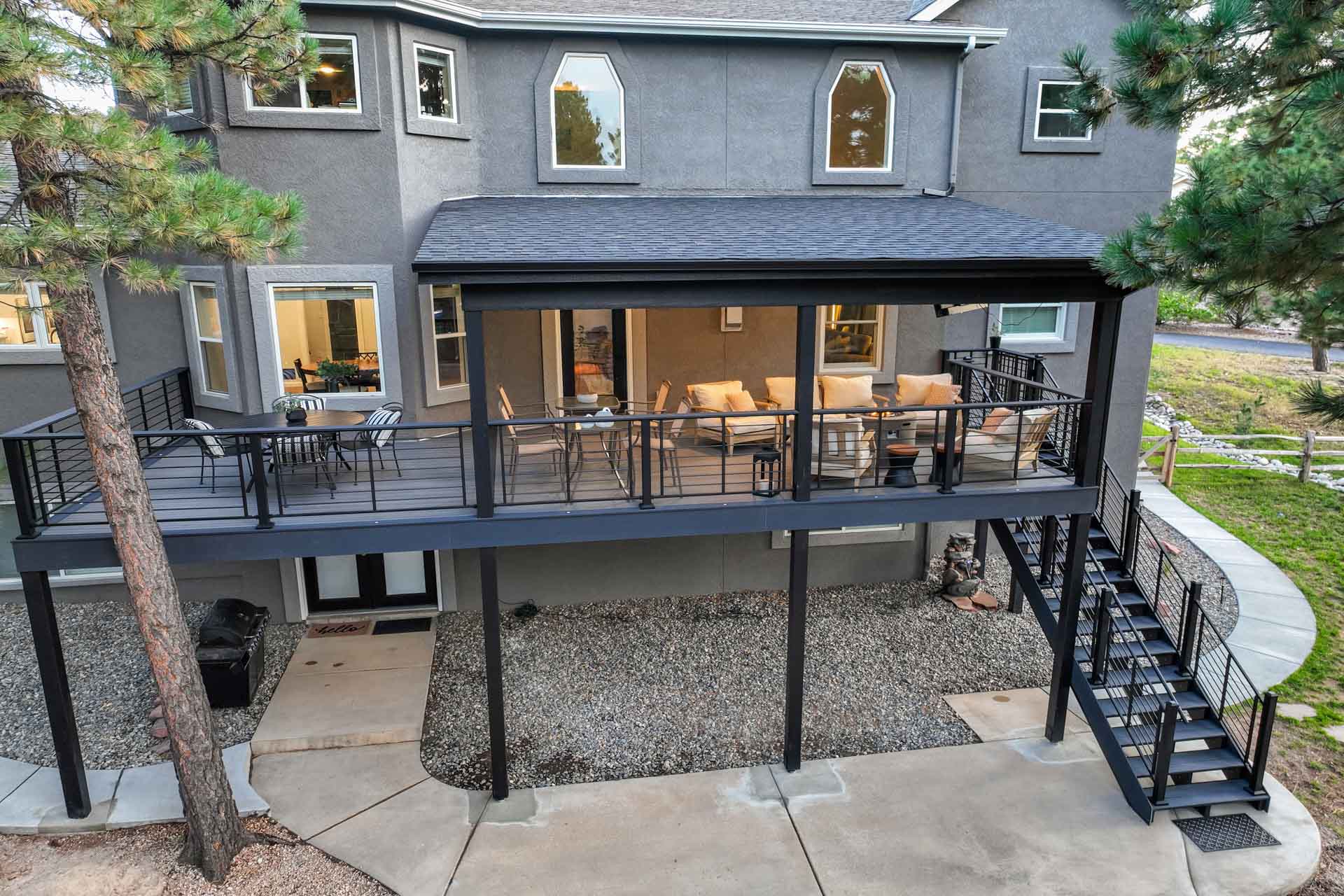
5. Treat under the deck as part of the house
Embers collect under decks, and stored material under a deck is a classic way to lose one. Clearing the underfloor area and adding noncombustible ground cover under the footprint is high leverage even if the deck itself is staying for now. If you are rebuilding, look at fire-resistant decking materials and steel-frame decks at the same time.
6. Check fencing and walls near the structure
An attached wood fence is a direct path to your siding. Retaining walls close to the house deserve the same look. Do not assume a fence is fine because it is technically outside. Ask what applies to your address during design review.
7. Coordinate gravel with drainage
Gravel beds still need thinking about drip lines, downspout splash, and weed control. Poor drainage against a foundation is still a building problem even when the surface will not burn. Hardscape and drainage get designed together, or you fix it twice.
Making It Look Like a Home, Not a Firebreak
The worry we hear most is that the Immediate Zone will look stark. It does not have to.
- Match stone color to existing masonry or your patio pavers
- Frame the entry with a simple geometric apron
- Use containers on noncombustible pads where the rules allow it
- Push lush planting out to the wider zones, with rock and intentional space between plant groups
- Light the hardscape so the area still feels finished after dark
As a family-run outdoor builder with four generations of Colorado experience, we design these zones to balance mitigation and livability. You can see how the materials come together in our project portfolio.
Fold It Into Work You Are Already Doing
Fall is when people refresh mulch, clear needles off roofs and out of beds, and plan deck replacements for the quieter construction season.
If you are already getting a quote on a deck, patio, or landscape package, put the Immediate Zone in the same design. Otherwise you end up rebuilding the same yard twice.
Worth knowing: the Colorado Springs Fire Department also runs a neighborhood chipping program to help residents remove hazardous branches and vegetation. If you have tree work to do in the outer zones, that is worth a call.
FAQ
Does every Colorado Springs home have to rebuild the first five feet?
No. It depends on WUI mapping, occupancy, and whether you are doing new construction or certain alterations. Confirm for your parcel. That said, plenty of homeowners outside mapped areas do this work voluntarily.
Is gravel enough?
Gravel can absolutely be the answer, but depth, weed barrier choices, edge restraint, and keeping it clear of organic debris all matter. A thin layer of rock over dirt that is full of pine needles by November has not accomplished much.
Can I keep my foundation flowers?
Usually the Immediate Zone restricts new plantings and combustible mulch, with some exceptions for approved low-flammability species and existing trees with clearance. Verify before you replant.
Should this happen before or with a deck rebuild?
Together. A new ignition-resistant deck sitting over bark mulch and stored lumber undercuts the whole upgrade.
Design the First Five Feet with Us
If you want the first five feet of your property working harder for resilience without giving up a finished outdoor look, we can design it as part of a landscape and hardscape plan.
Call 719-370-3325 or request a quote. Bigfoot Decks & Landscapes serves Colorado Springs, Monument, Black Forest, Falcon, Larkspur, Castle Rock, Castle Pines, and Parker.