Pavers vs. Stamped Concrete: Which Patio Holds Up Better in Colorado?
Pavers or stamped concrete for your Colorado Springs patio: how each one handles freeze-thaw, repairs and upkeep, and what makes either one last.
In this post
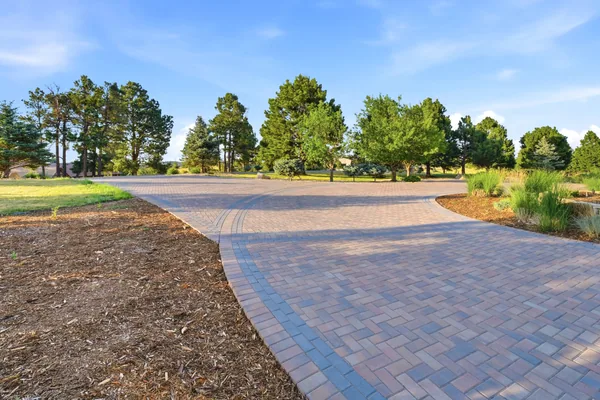
October is when patios start telling the truth. The first hard freezes find every low spot, open joint and hairline crack. It’s also when many Colorado Springs homeowners start planning the patio they want next spring. One question comes up in almost every one of those conversations: pavers or stamped concrete?
Both can look great, and both can fail. Along the Front Range, the surface you pick matters less than what’s underneath it and how water moves around it. This guide compares the two honestly. It covers how each one handles Colorado winters, what maintenance looks like, and the construction details that decide whether either one lasts.
Quick answer: Neither option is automatically better. Pavers are individual units set on a compacted base, so they can flex with ground movement and be repaired one section at a time. Stamped concrete is one continuous slab with a seamless, textured look, but it relies on control joints and regular sealing, and a crack is hard to repair invisibly. In Colorado’s freeze-thaw climate, base preparation, drainage and edge restraint decide how long either one lasts.
How each patio is built
Paver patio
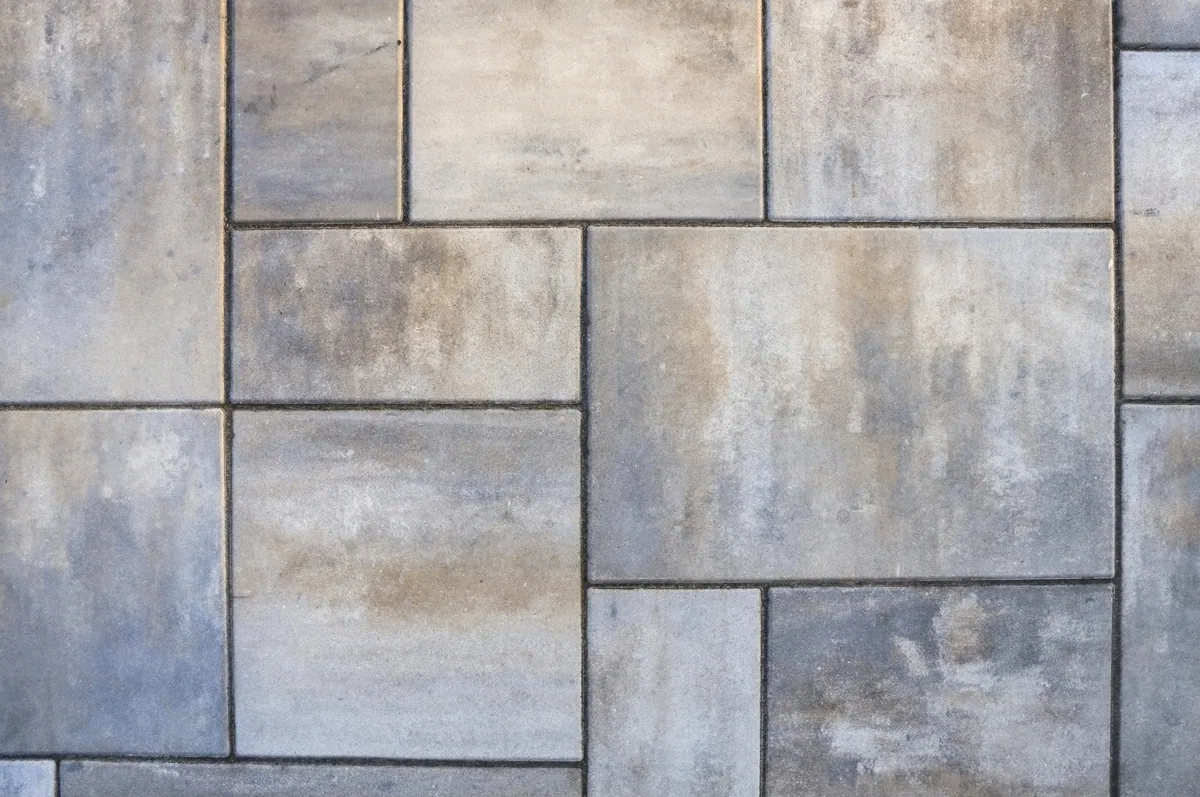
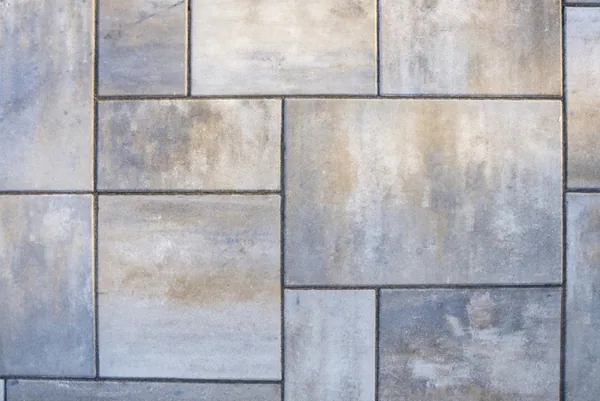
- Individual concrete or stone units laid in a pattern
- A compacted aggregate base and a bedding layer under the pavers
- An edge restraint that keeps the field from creeping outward
- Joints filled with sand, often polymeric sand, that lock the units together
Stamped concrete patio
- One poured slab, colored and stamped to look like stone, brick or tile
- A prepared and compacted subgrade, often with reinforcement
- Control joints cut or tooled in so cracking happens along planned lines
- A sealer that protects the color and surface, renewed over time
How Colorado weather tests each one
Freeze-thaw
Water gets into joints, cracks and the base. When it freezes, it expands, and when it thaws, the surface settles again. A paver field can shift slightly without breaking because each unit moves on its own. A slab can’t flex that way. It relieves stress by cracking, ideally at the control joints. Either surface fails faster when water sits in the base, which is why drainage comes first.
Front Range soil movement
Much of the Front Range has clay-heavy soils that swell when wet and shrink when dry. Every yard is different, but that movement is one more reason the base matters. Neither surface makes up for a thin or poorly compacted base.
Sun, hail and snow removal
High-altitude sun fades color and wears down sealers. Hail and snow shovels are hard on any surface. The practical differences:
- Pavers come in through-body colors and textures, and a damaged unit can be swapped out.
- Stamped concrete’s color and finish depend on the sealer and need periodic upkeep. Chips and scrapes are harder to blend in.
- Both surfaces need care with deicers. Shovel first, and use products your installer and the manufacturer approve for that material.
| PAVERS | STAMPED CONCRETE | |
|---|---|---|
| LOOK | Patterns, borders, mixed sizes and colors | Seamless surface with a stamped texture |
| GROUND MOVEMENT | Units can shift slightly without breaking | Rigid slab; stress shows up as cracks |
| REPAIRS | Lift and reset or replace only the affected units | Patching a crack so it blends in is difficult |
| ROUTINE UPKEEP | Keep joints filled; pull weeds; reset any settled spots | Reseal periodically; watch control joints and cracks |
| DRAINAGE | Joints shed water; permeable paver systems are an option | Water runs off the surface, so slope is critical |
| SNOW REMOVAL | Shovel-friendly once the joints are locked; avoid catching edges | Smooth to shovel; protect the sealer |
| COST | Depends on site, design, access and base work; quoted per site | Depends on site, design, access and base work; quoted per site |
We don’t publish price ranges. Patio cost here depends heavily on excavation, base depth, drainage and access, so the only honest number is a site-specific quote.
When pavers are usually the better fit
- You want easy, invisible repairs down the road
- The yard has known soil movement or a history of slab cracking
- You want borders, patterns or mixed materials that tie into walkways and seat walls
- You might add utilities later , such as gas for a fire feature or low-voltage lighting, and want to be able to lift and reset units
- You’re pairing the patio with drainage improvements or a permeable system
When stamped concrete can make sense
- You want a seamless, continuous look
- The site is stable and drains well
- You’re comfortable with a regular sealing schedule
- The layout is simple, with few cuts or transitions
Where natural stone fits
Flagstone and other natural stone can be beautiful here, especially in a landscape designed around native and low-water plantings. Stone is set either dry on a compacted base, which behaves more like pavers, or in mortar over a concrete slab, which behaves more like concrete. Ask which method is proposed, because it changes how the patio handles winter.
What actually makes either patio last here
Homeowners often compare bids on the surface alone. The difference that lasts is underground and at the edges.
- Base and compaction. A thin or poorly compacted base usually shows up after the first hard winter, not the first week.
- Drainage. The patio should slope away from the house, and roof water needs a clear path that doesn’t end on the patio.
- Edges. Paver fields need a solid edge restraint. Slabs need edges that won’t undermine or heave.
- Joints. Paver joints should stay filled and locked. On concrete, control joints should be placed to match the layout and slab size.
- Material quality. For concrete pavers, ask whether the product is made to ASTM C936, the industry specification for solid concrete interlocking paving units. For concrete, ask about the mix, reinforcement and sealer plan.
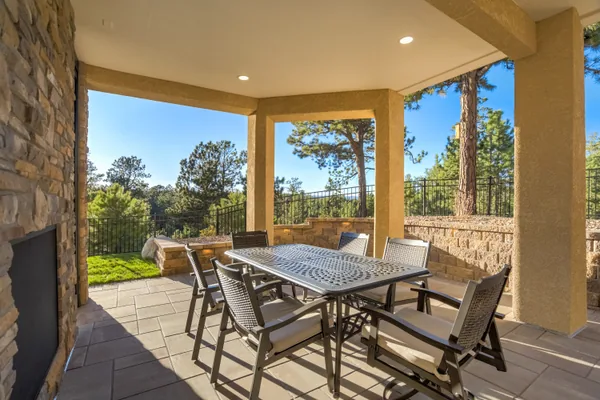
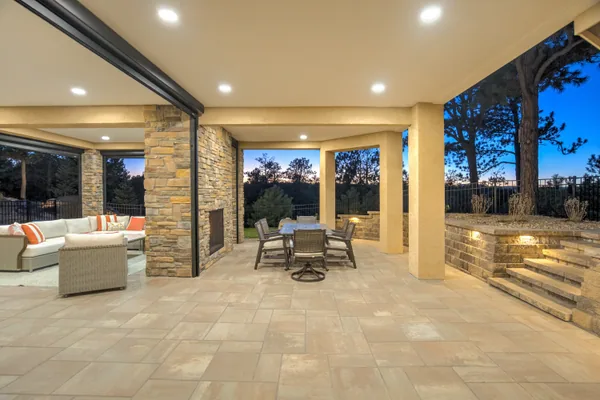
- Design for how you live. Plan around where the grill, table, fire feature and foot traffic will actually go. Our post on using hardscapes in your outdoor living area has layout ideas.
If you already have a patio that’s cracking or heaving, start with our guide to freeze-thaw patio damage in Colorado Springs. It walks through when to repair and when to rebuild.
Planning a project like this?You walk the property with us, and you leave with a plan.
Get a quoteDo you need a permit for a patio in Colorado Springs?
A basic patio on grade usually doesn’t need a building permit from the Pikes Peak Regional Building Department (PPRBD). Its exemption list includes private sidewalks, driveways and platforms supported directly on grade (PPRBD, Permit Not Required). Its homeowner guidance also lists concrete flatwork as an example of work that generally doesn’t need a permit, though zoning or floodplain review may still apply depending on where you live (PPRBD, Homeowner Permits).
Things change once you add structure. PPRBD lists patio covers and enclosures, retaining walls over 4 feet, gas or solid-fuel fireplaces, and electrical work as permitted work. HOAs often have their own approval process as well. If you’re planning a covered patio, compare your options in Pergola vs. Pavilion vs. Patio Cover. If your home is in a wildfire-prone area, see how hardscape near the house fits in Defensible Space Hardscape for Colorado Springs Homes.
Planning a new patio this fall
- Watch your yard after the first freezes and storms. Note where water sits, where ice forms first, and where downspouts discharge.
- Decide how you’ll use the space. Dining, lounging, a fire feature, an outdoor kitchen, or all of these.
- Get a site visit, not a phone quote. Base depth, drainage and access drive both performance and price.
- Ask every bidder the same questions: base depth and compaction, drainage plan, edge restraint, joint material or control-joint layout, and the material spec.
- Lock in design over the winter so you’re ready to build when the season opens.
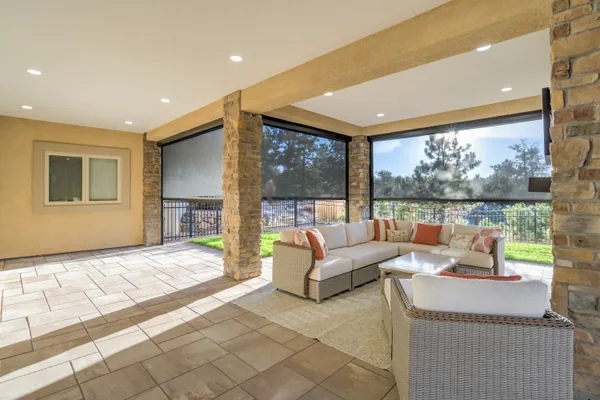
To see finished patios, hardscape and outdoor living spaces we’ve built around the Front Range, browse our project portfolio.
FAQ
Are pavers better than stamped concrete in Colorado?
Not automatically. Pavers can flex with ground movement and are easier to repair invisibly, which suits Colorado’s freeze-thaw cycles and Front Range soils. Stamped concrete can perform well on a stable, well-drained site with good control joints and regular sealing. Base, drainage and edges matter more than the material name.
How long does stamped concrete last?
There’s no honest single number. It depends on the base, the control-joint layout, drainage, sun exposure, deicer use and how consistently it’s resealed. Ask any installer what maintenance they expect and what they recommend for your specific site.
Do pavers heave or sink in Colorado winters?
They can if the base is thin, poorly compacted or holding water. A properly built base with good drainage and a solid edge restraint keeps a paver field stable, and settled spots can be lifted and reset.
Can you lay pavers over an existing concrete patio?
Sometimes, but it depends on the slab’s condition, its slope and how it drains, plus the added height at doors and thresholds. A cracked or heaving slab usually needs to come out first. This is a site-visit decision.
Which is easier to shovel, pavers or stamped concrete?
Both can be shoveled. Stamped concrete is a continuous surface. Pavers shovel well once the joints are filled and locked and the field is flat. Use a shovel edge and deicer that are safe for your surface.
Do I need a permit for a paver patio in Colorado Springs?
A basic patio on grade generally doesn’t need a PPRBD building permit, but zoning, floodplain or HOA review can still apply. Covers, enclosures, retaining walls over 4 feet, fireplaces and electrical work need permits.